
August Is Intersectionality Awareness Month
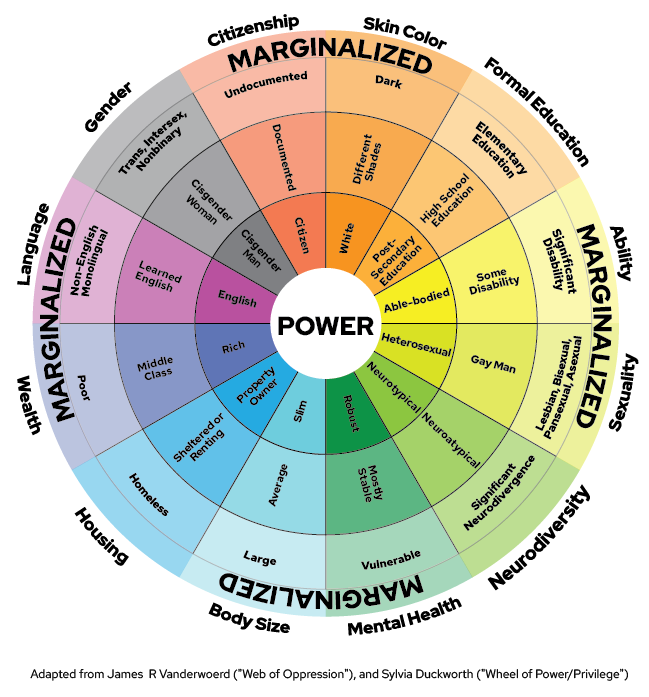
Graphic from James R. Vanderwoerd ("Web of Oppression"), and Sylvia Duckworth ("Wheel of Power/Privilege")
August is Intersectionality Awareness Month, a time to recognize how overlapping aspects of our identity—race, class, gender, sexuality, ability, and more—shape our lived experiences. Kimberlé Crenshaw coined the term back in 1989, but the truth of it has been around a lot longer than the word.
Intersectionality isn’t just “more than one label.” It’s about how those identities combine to create both privilege and barriers. It’s about how the world sees us—and how we see the world. And yes, it shows up in fiction just as much as it does in life.
When I wrote my debut novel, Holland, My Heart, in 2020–2021, I didn’t know anything about the academic framework of intersectionality. I just knew I wanted my characters to feel real—layered, contradictory, and shaped by more than one defining factor. It turns out I was writing intersectional romance without having the vocabulary for it yet.
Meet Kai and Holland
Kai, my male main character, is Black and Pacific Islander. He’s also a billionaire, which means he moves through the world with immense financial privilege—but his racial identity shapes how he’s perceived, even in elite spaces. He talks about his family like this:
"My grandfather was a larger-than-life former NFL wide-receiver-turned-hedge-fund-manager whose daughter married the equally huge Samoan software developer. The two men could not have been more different in temperament. Yet they were best friends. My fondest memories are of the two Brobdingnagian men grilling steaks and shooting the shit on my grandfather’s back porch or my dad’s balcony every Sunday of my early life."
Holland, my female main character, is white and cisgender—but she’s also queer and grew up in deep poverty, with a mother whose mental illness shaped her entire childhood. As she puts it:
"When I was eleven, I figured out that my mother never remembered what we talked about—much later I understood it was because she was drinking all the time. Anyway, I started writing things down and making her sign them. It worked pretty well for a while. She was a mess. She left me in a rented room in Pacoima when I was seventeen... I packed what little I had—just some clothes and books—and lived out of my beat-up VW Jetta until I moved into my dorm that fall."
These aren’t just backstory details—they’re the lenses through which Kai and Holland see each other, navigate conflict, and build trust. His experience with race, family legacy, and wealth intersects with her experiences of queerness, whiteness, and financial instability. Every scene between them is shaped by these intersecting truths.
Why Intersectionality Belongs in Romance
Romance gets richer when our characters carry more than one dimension of identity. Intersectionality in romance isn’t just a “diversity checklist.” It’s about asking:
How do overlapping identities shape attraction?
How do they influence conflict and misunderstanding?
How do they affect the stakes—and the happily-ever-after?
In Kai and Holland’s case, their identities don’t just add flavor—they’re the soil their love story grows in. Without them, the book wouldn’t be the same story at all.
Learn More—and Tell Me Yours
If you’re curious to dig deeper, here’s a helpful guide from the University of Wisconsin–Madison that breaks down what intersectionality means and why it matters.
And now I want to know—what’s a romance character whose complexity you couldn’t stop thinking about? Maybe it was their background, their contradictions, or the way they carried more than one truth at a time. Tell me in the comments so I can add them to my TBR.
